Raw Shea Butter vs. Raw Mango Butter
Raw Shea Butter vs. Raw Mango Butter
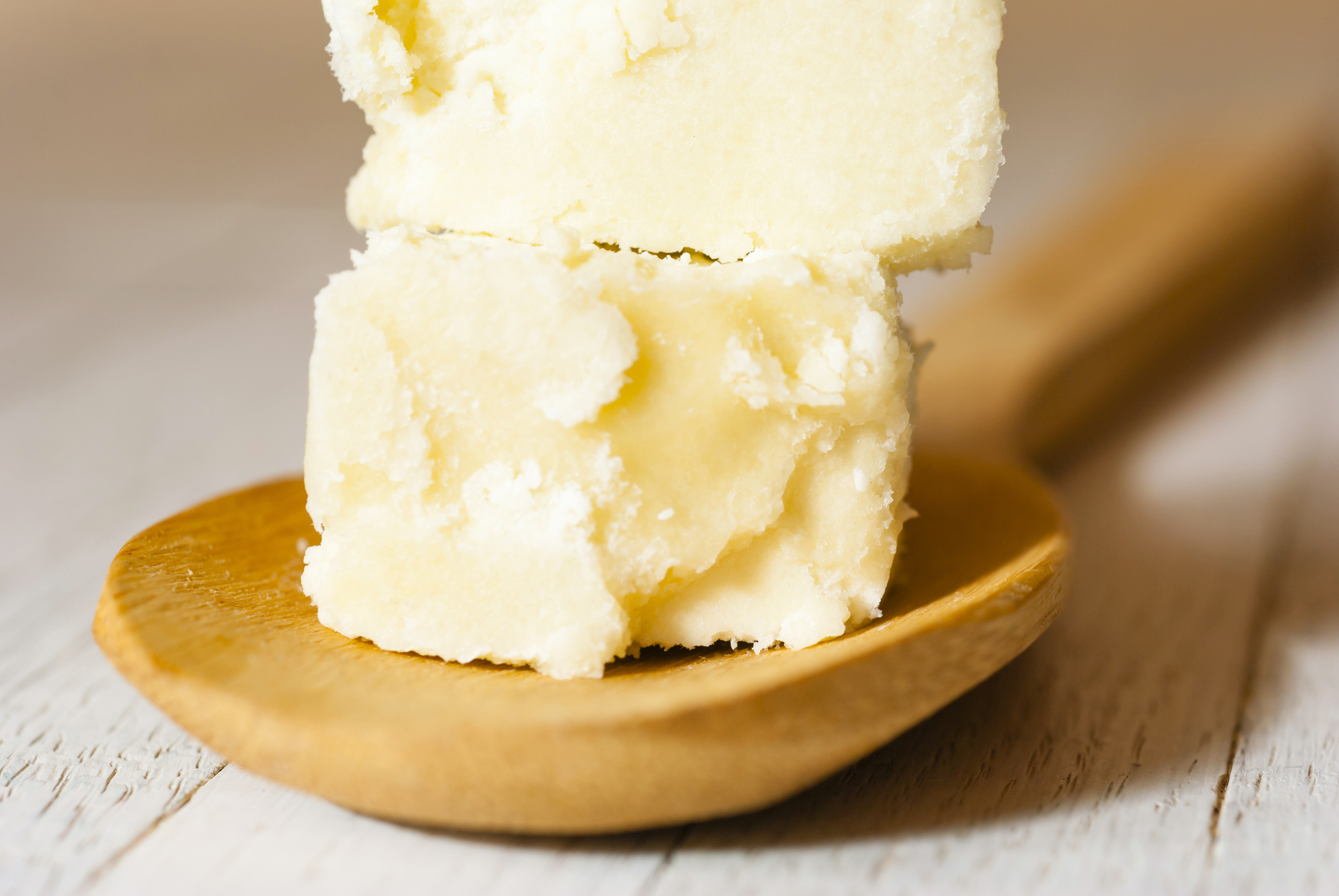
Shea butter and mango butter are two of the most well-established plant-based ingredients in skincare — not because of marketing, but because of track records. Both have been used across Africa and South Asia for generations, in contexts ranging from skin conditioning and scar treatment to Ayurvedic practice and postpartum care. Their longevity in those traditions is evidence of something real.
They’re also genuinely different from each other. Understanding how they differ — in composition, texture, and application — makes it easier to use them correctly.
Mango Butter Origins
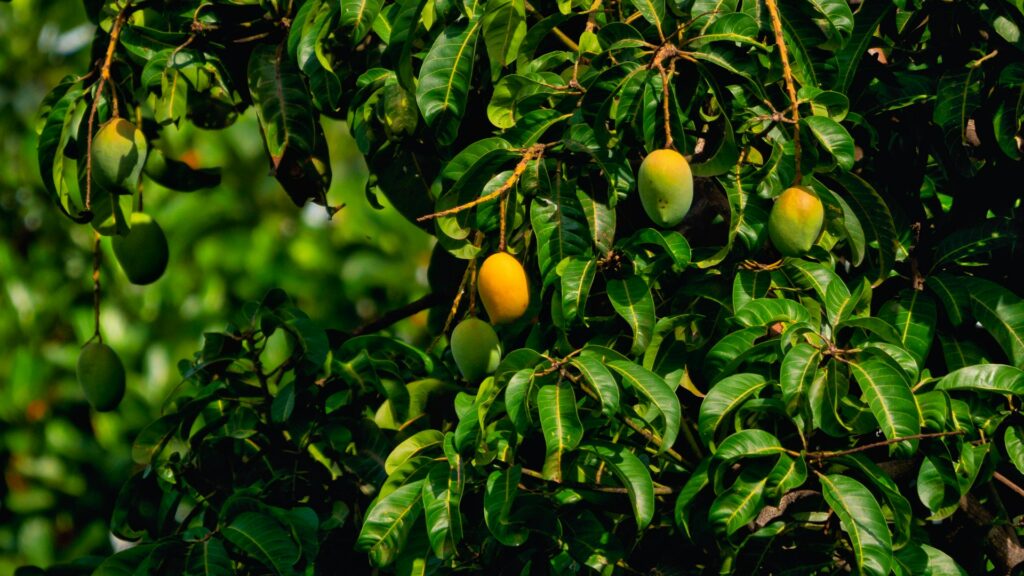
Shea butter is extracted from the nut of the shea tree, Vitellaria paradoxa or Vitellaria nilotica depending on region. Mango butter is derived from the seed kernel of Mangifera indica — the mango tree, native to South Asia and now cultivated across tropical regions worldwide. Most mango butter is still sourced from India, where the highest concentration of mango cultivation exists.
The butter comes from the seed, not the fruit. This is worth noting because it explains why unrefined mango butter carries a faintly creamy, earthy scent rather than anything resembling mango. Versions that smell like mango or appear vibrant orange have been enhanced with fragrance and dye — they’re not representative of the raw ingredient.
Differences in composition and texture
The benefits of mango butter are often underrated compared to shea butter. However, its lighter weight and fast absorption make it an Both butters contain stearic and oleic acids, but in different ratios, and that difference is what you feel on skin. Shea butter — particularly West African shea — is higher in stearic acid, which makes it firmer, more occlusive, and slower to absorb. It forms a protective layer on the skin surface. Mango butter has a lighter, silkier texture, spreads more easily, and absorbs more quickly without leaving residue.
Mango butter is also rich in vitamins A, C, and E, and tends to feel less occlusive than shea — which makes it better suited to oily or combination skin types, and to formulations where texture is a priority alongside lipid content.
Refined versions of both butters lose meaningful ground in this comparison. Refining strips the natural color, scent, and a significant portion of the active compounds — vitamins, triterpenes, and the fatty acids responsible for most of the skin benefit. What remains is a more cosmetically neutral base. Unrefined is the standard worth holding to.
Mango butter on the skin
Mango butter’s lighter weight is not a compromise — it’s a different function. It supports skin elasticity without heaviness, softens texture over time, and offers antioxidant activity through its vitamin content. For sensitive or reactive skin, it’s a calming option that doesn’t require the occlusion that a heavier shea application would deliver.
It’s also particularly well-suited to facial use and to formulations where a dense, waxy finish would be a liability.
Shea and Mango Butter in Body Butters
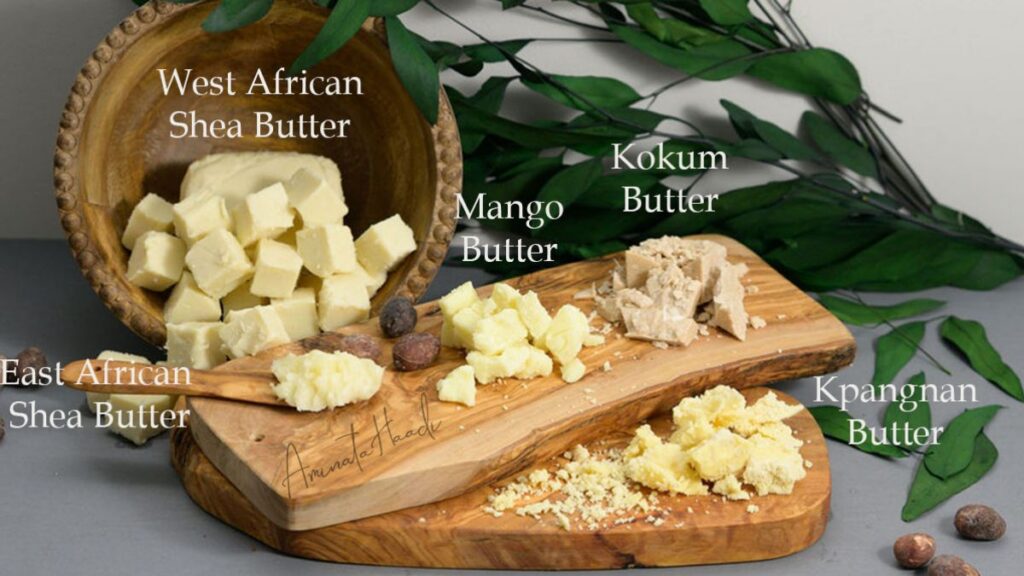
A body butter — in the traditional sense — contains no water. It’s a concentrated blend of plant butters and oils designed to support the skin’s lipid barrier directly. What’s sold as body butter in most commercial contexts is typically a water-based lotion with thickeners: a different product category with a different mechanism.
Waterless formulations work because the lipids they deliver are undiluted. Shea and mango butter both play a role in this. West African shea contributes density and occlusion — barrier reinforcement for areas under sustained stress. Mango butter contributes slip and a lighter finish, making it useful where texture and spreadability matter. In combination, they complement rather than duplicate each other.
At Aminata Haadi, our body butters are built on this principle: no water, no preservatives, no synthetic stabilizers. Unrefined shea, raw mango butter, kokum butter, and complementing botanical oils — each chosen for what it contributes structurally to the formula.
Choosing between the two
Shea butter is denser, more occlusive, and better suited to body care, compromised barriers, and skin that needs sustained protection. Mango butter is lighter, faster-absorbing, and more appropriate where texture is a factor — particularly facial use and formulations for oily or combination skin.
They’re not competing ingredients. In a well-designed formula, they work together. The distinction matters most when you’re choosing a single ingredient or evaluating what a product is actually built to do.