Minimalist Skincare: The Shift from Maximalism to Meaning
Minimalist Skincare: The Shift from Maximalism to Meaning

For years, skincare was defined by accumulation. More steps, more actives, more complexity—as if the number of products applied determined the quality of care. The industry rewarded excess, and routines became performance rather than practice.
The shift away from this model is not a trend. It is a correction.
Minimalism in skincare is not about doing less for the sake of less. It is about asking what the skin actually needs and removing everything that obscures the answer. It is a return to clarity—fewer products, better ingredients, and a focus on barrier health rather than constant intervention. As we practice it, minimalism is not merely aesthetic. It is ethical—efficacy—and it honors origin, time, and intention.
Formulation Philosophy
Minimalism begins with the question: what does this ingredient do?
Every ingredient in a formulation should have a specific, defensible reason for being there. Not to lengthen the ingredient list, not to signal luxury, or efficacy through complexity, but because it contributes functionality to the product. This is not simplicity for simplicity’s sake—it is precision.
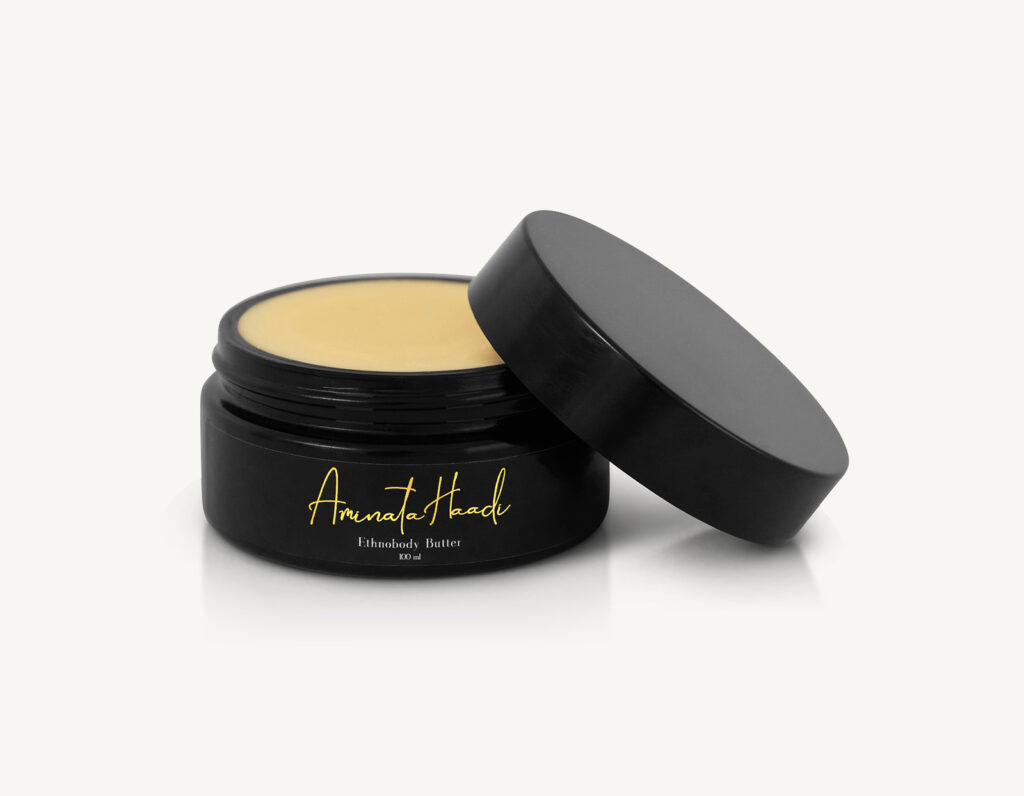
At Aminata Haadi, minimalism manifests as anhydrous formulations. No water. No emulsifiers. No preservatives. What remains is plant fats, cold-pressed oils, and actives—nothing diluted, nothing compromised.
Why Origin Matters

When a formulation relies on fewer ingredients, each one carries more weight. Its quality, its origin, its processing—all of it becomes visible in the final product.
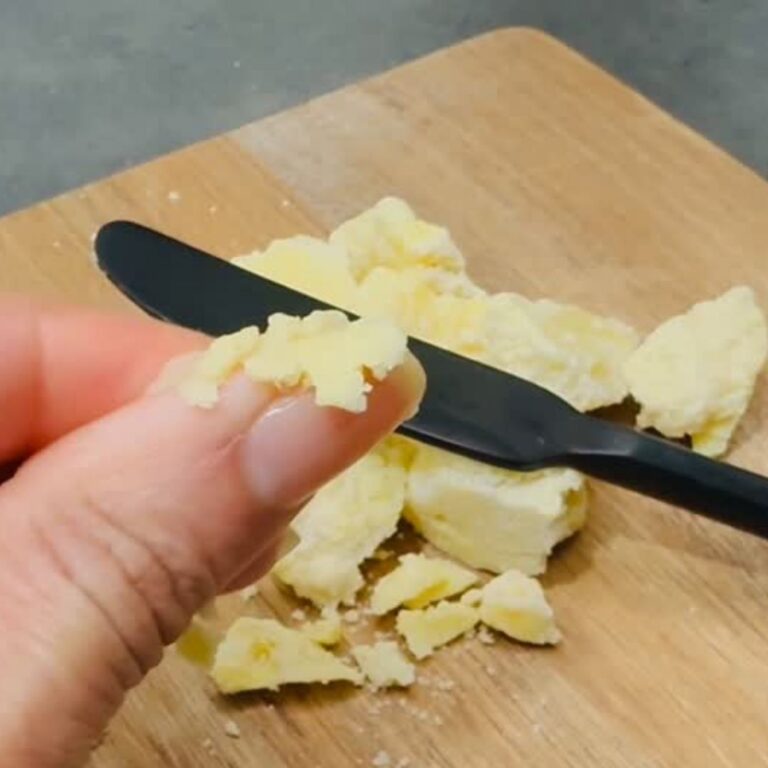
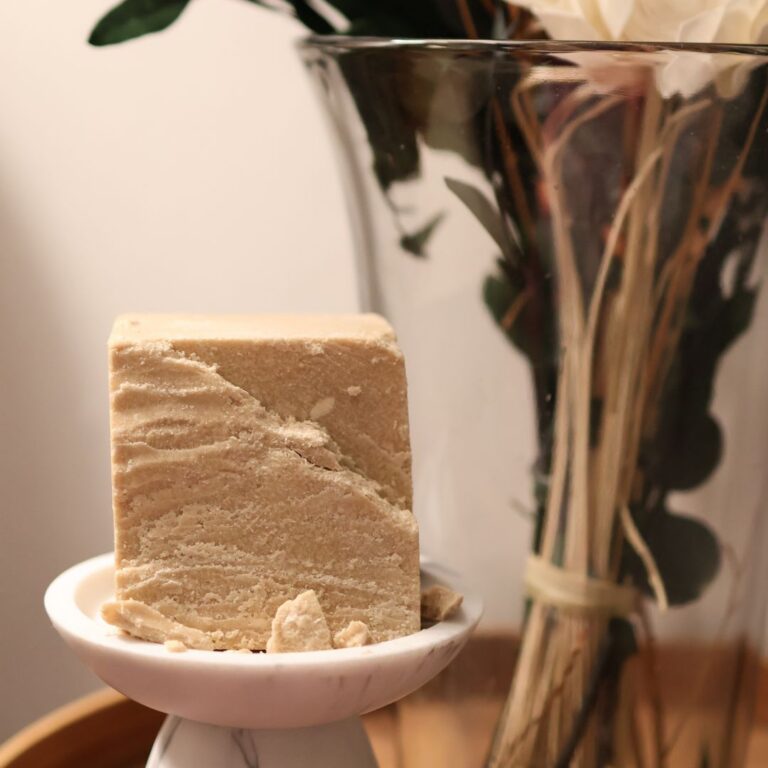
This is why we source wild-harvested and organically grown botanicals from their regions of origin. Raw shea butter from West Africa. Nilotica shea from East Africa. Kokum butter from India. Kpangnan butter from Benin and Togo. These are not interchangeable ingredients pulled from a supplier catalog. They are specific plants, grown in specific ecosystems, processed using traditional methods that preserve their integrity.
When you formulate minimally, you cannot hide behind filler. The ingredient has to perform on its own terms. That requires sourcing ingredients that have not been refined, bleached, deodorized, or chemically altered—because every step of processing removes something the skin would have benefited from.
Time Over Instant Results
The beauty industry sells urgency—visible results in days, weeks at most. Skincare minimalism operates on a different timeline. Improvements compound slowly. Barrier integrity strengthens over months, not days. Texture improves as irritation decreases and the skin stops being disrupted by constant product rotation.
This requires patience, which is incompatible with excess. A ten-step routine built on actives and acids forces the skin into a reactive state—always recovering, always adapting, never stable. Minimalism removes that friction and creates the conditions under which the skin can function without interference. The timeline is longer, but the results are more durable.
A strong barrier does not collapse the moment you travel, skip a night, or experience stress. It holds because it was built gradually, and that durability makes the routine itself more sustainable.
Why Fewer Products Change the intention
A complicated routine is laborious. It becomes a project rather than a practice. Most people cannot maintain it long-term, it often triggers skin reactivity, destabilizes the skin barrier and forces dependency through constant intervention.
A minimalist routine, by contrast, is repeatable. Cleanse, moisturize, protect. Three steps that do not require negotiation. The fewer decisions required, the more likely the routine survives real life—travel, fatigue, busy weeks, seasonal changes.
But minimalism also changes the quality of attention. When you are not managing a myriad of products, you can pay closer attention to the one or two that produce results. You notice how the balm feels, how the skin responds, whether the texture has shifted. The routine becomes observation rather than performance—attention to how the product works, not just the act of applying it.
Closing
The quality of the product depends on the quality of every ingredient. A handful of plant ingredients buried in a list of synthetic compounds does not signal craftsmanship, efficacy, or quality—it indicates filler.
Our product philosophy builds relationships—from sustainability and fair-trade cooperatives to the bond between the person and the product.
Minimalism is not a restriction. It is a standard. And the standard is that every ingredient earns its place.