Kpangnan Butter: The Rare African Butter Behind a Better Face Balm
Kpangnan Butter for Skin: Benefits, Uses & The Ideal Face Balm Ingredient
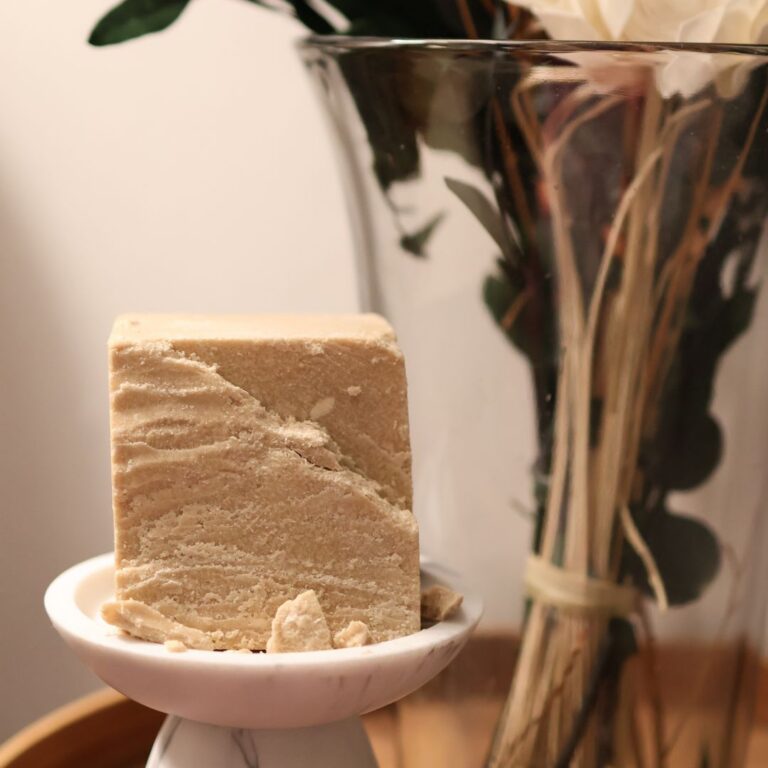
Kpangnan butter is one of the least understood ingredients in natural skincare—and one of the most effective. Extracted from the seeds of the Pentadesma butyracea tree, it has been used for generations across West Africa to nourish and protect skin from environmental stress. It is not shea butter, though the two are often confused. Kpangnan is quieter, drier in texture, and less well known. This is precisely why it works so well in a face balm—it does its job without announcing itself.
A History of Cultural Use
Kpangnan butter has been harvested in the tropical forests and riverbanks of West Africa for centuries. In traditional pharmacopoeia across Benin, Togo, and Ghana, it was applied directly to skin to soothe irritation, protect against dryness, and support healing. The tree bears large, bright red flowers that produce edible berries; it is the seed of these berries that yields the butter.
Raw shea butter became widely known in Western skincare decades ago—it migrated early into commercial markets and, with that migration, industrial processing. Kpangnan did not follow the same path. It remained largely within traditional use, which means it has been far less subjected to the refining and deodorizing that strips botanical butters of their properties. What you find in an unrefined, wild-harvested form is close to what communities in West Africa have been using all along.
Why Kpangnan Works
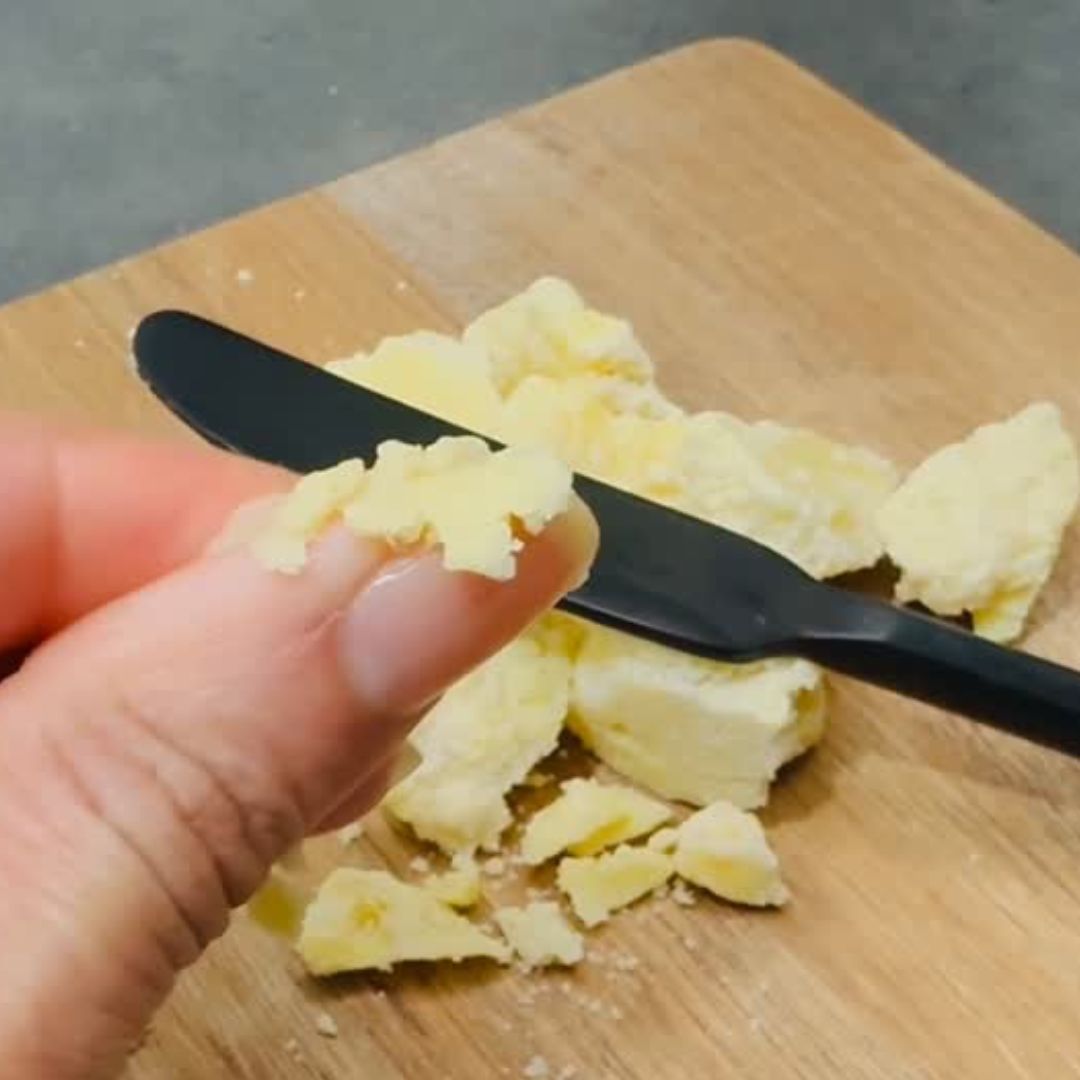
Kpangnan butter is rich in stearic acid and oleic acid—two fatty acids that play distinct but complementary roles in skin health. Stearic acid strengthens the skin barrier, improving texture and helping the skin retain moisture over time. Oleic acid penetrates deeper into the skin, delivering hydration and anti-inflammatory support at a level that surface-level moisturizers cannot reach. Together, they create a profile that hydrates without heaviness—the butter melts on contact and absorbs with a dry, silky finish, leaving no grease, no residue, no film.
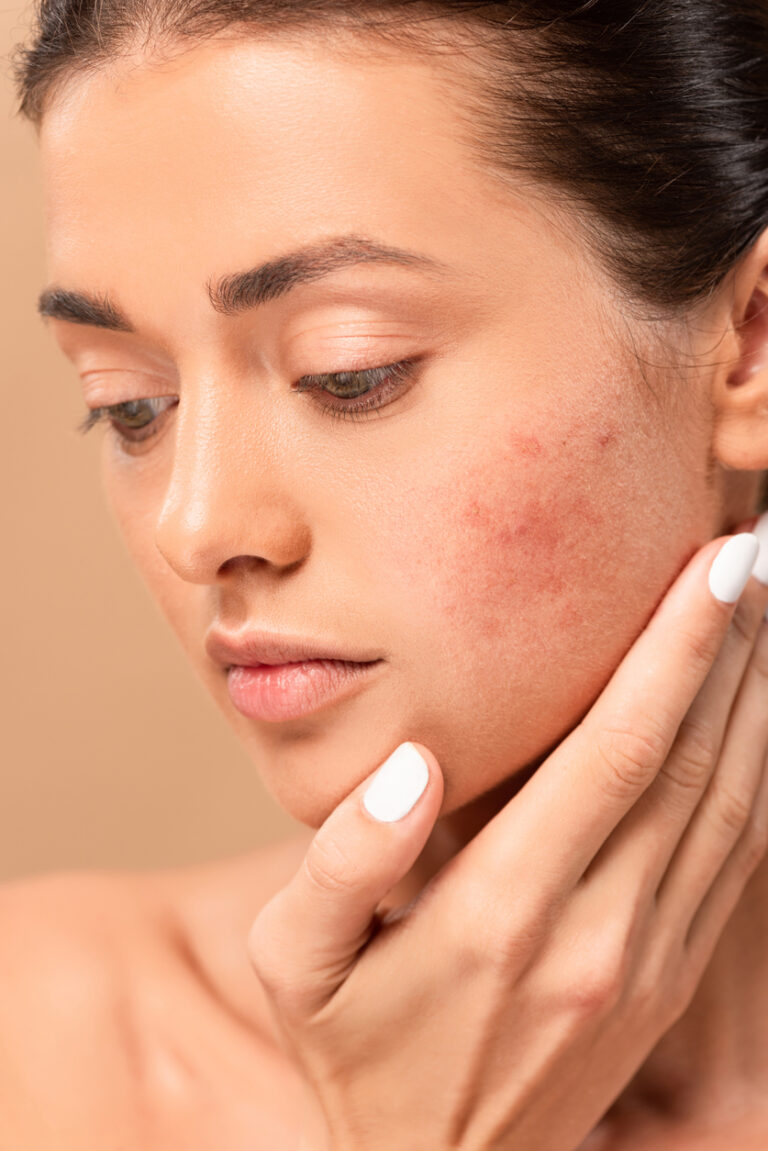
Kpangnan also contains a meaningful concentration of stigmasterol, a phytosterol that supports cell regeneration and tissue repair. This is not a common compound in botanical butters, and it is part of what makes kpangnan particularly suited to skin that is dry, irritated, or slow to recover. The butter’s comedogenic rating is low—typically scored between one and two, which means it is unlikely to clog pores. It moisturizes deeply without the occlusive heaviness that heavier butters can create.
Kpangnan in ORI
In ORI Face Balm, kpangnan butter works alongside nilotica shea and kokum butter to create a moisturizing base that functions without water. Each butter in the formulation was chosen for a specific reason. Kokum provides non-comedogenic moisture and barrier repair with a weightless finish. Nilotica shea offers the deep, slow hydration with an exceptionally soft and creamy texture. Kpangnan fills the space between the two—its stearic acid content strengthens what kokum repairs, and its lighter absorption profile prevents the face balm from sitting heavy on the skin. The result is a balm that melts, absorbs, and leaves the skin feeling moisturized without feeling coated.
How to Use
ORI is an anhydrous face balm—solid at room temperature, designed to melt on contact with skin. Apply a dime sized amount with your finger or applicator wand, warm it briefly between your palms, and moisturize your face in upward strokes. Although ORI can be used morning or evening, its best applied as a stand along product or a as a sealant to your skincare routine.